
Welcome to the world of Gout vs arthritis, where joints have a knack for throwing tantrums! If you thought all joint pain was created equal, think again. Gout and arthritis may share the same stage, but they have their unique dance moves—one might be busting out the fiery salsa while the other does a slow waltz. So, buckle up as we journey through the twists and turns of these two notorious party crashers of the body!
At their core, gout is like that uninvited guest who shows up just to ruin your fancy dinner party with intense, throbbing pain (thanks to those pesky uric acid crystals), while arthritis is the chronic condition that creeps in and sets up camp, making your joints feel stiff and achy over time. We’re diving into their differences, symptoms, and even how they relate to the broader spectrum of joint-related chaos.
Understanding Gout and Arthritis
Gout and arthritis often get mistaken for one another, much like that one friend who always orders the same drink but insists they have a refined palate. While both conditions are related to joint discomfort, they come from different sources and wear unique hats in the realm of inflammatory diseases.Gout is essentially the diva of the joint family, a specific type of arthritis that struts around demanding attention, often triggered by an excess of uric acid.
In contrast, arthritis is a broader term that includes various conditions causing inflammation in the joints. Not unlike a buffet, it offers several varieties, each bringing its own set of symptoms and triggers. The common symptoms associated with both gout and arthritis include joint pain, swelling, stiffness, and in some cases, a touch of redness that could rival a tomato.
Types of Arthritis and Their Relation to Gout
The realm of arthritis is vast and complex, akin to a family reunion where everyone claims to be the favorite cousin. It includes many different types, and among them, gout is a special guest who brings its own flair. Understanding the common types of arthritis provides insight into how they intersect with gout.Here’s a breakdown of some of the key types of arthritis:
- Osteoarthritis: The wear-and-tear king, it often affects older adults, causing joint pain and stiffness, particularly after physical activity.
- Rheumatoid Arthritis: This autoimmune troublemaker occurs when the body’s immune system starts attacking its own joints, leading to pain, swelling, and potential joint deformities.
- Pseudogout: A cousin to gout, this type involves calcium crystals instead of uric acid crystals causing similar symptoms but without the same dietary repercussions.
- Psoriatic Arthritis: This type is like a package deal, combining skin conditions with joint pain, affecting those with psoriasis.
- Infectious Arthritis: A party crasher, it’s caused by infections in the joint, leading to pain and swelling, often requiring medical attention.
It’s essential to understand these types because while gout can be a standalone star, it often shares the stage with other forms of arthritis. For instance, individuals with gout may also suffer from osteoarthritis, creating a duet of discomfort that can make everyday tasks feel like a chore.
In the world of joint pain, it’s crucial to know your players: gout, the spicy soloist, and arthritis, the diverse ensemble.
Health and Related Conditions
Arthritis isn’t just a lone wolf prowling through the body; it often brings along a posse of related health issues that can turn your life into a sitcom of discomfort. As if being an arthritis sufferer isn’t enough, it can also have connections to conditions like anxiety and allergies. Let’s dive into this complex web and see how these conditions are entwined in a dance that no one asked to join!
Connection Between Arthritis, Anxiety, and Allergies
Arthritis can be more than just a physical ailment; it can have psychological effects that lead to anxiety. The constant pain and mobility challenges can make one feel like they’re on a never-ending roller coaster of worry and stress. Several studies indicate that individuals with chronic pain, like those with arthritis, are more prone to anxiety disorders. In fact, research has shown that up to 40% of patients with rheumatoid arthritis experience significant anxiety.
Allergies also have a peculiar relationship with arthritis. Some studies suggest that an overactive immune response, which is at the heart of many allergic reactions, can contribute to the inflammatory processes seen in arthritis. It’s like a bad party where everyone’s invited, and the immune system can’t seem to say, “No, thank you!” This overlap means that managing allergies might just help you take the edge off your arthritis symptoms.
Acupuncture for Arthritis Symptom Management
Acupuncture is not just an ancient practice for those who enjoy a little needle therapy; it’s gaining traction as a viable option for managing arthritis symptoms. By strategically inserting needles into specific points on the body, acupuncture aims to enhance circulation and reduce inflammation, almost like giving your body a tiny internal pep talk. Numerous studies show that acupuncture can help alleviate pain and improve joint function.
Imagine your joints whispering sweet nothings to each other instead of protesting every time you get up! Acupuncture sessions might also help reduce the anxiety that often accompanies chronic pain by promoting relaxation and wellness. Who knew that a few needles could lead to such a profound sense of relief?
Alternative Treatments for Arthritis and Gout
When it comes to managing arthritis and gout, traditional treatments are just one piece of the pie. Alternative treatments can provide additional support, sometimes like a trusty sidekick in a superhero movie. Here’s a look at some alternative options that can kick those painful joints into gear!Understanding these alternative treatments can empower you to take control of your health. They can be used in conjunction with traditional treatment plans, but it’s always wise to consult with a healthcare provider before embarking on new adventures.
- Physical Therapy: A superhero in disguise, physical therapy enhances mobility, strengthens muscles around joints, and teaches pain management techniques, making it essential for many with arthritis.
- Dietary Adjustments: Foods rich in omega-3 fatty acids, like salmon and walnuts, can help reduce inflammation. Getting rid of the “bad boys” such as processed sugars might also do the trick.
- Herbal Remedies: Turmeric and ginger have long been celebrated for their anti-inflammatory properties. Adding them to your spice rack could add some zing to your health!
- Mind-Body Practices: Yoga and meditation can reduce stress and improve flexibility, allowing you to channel your inner yogi while giving your joints a little love.
Health and Fitness Strategies
Finding the right balance in managing arthritis and gout can feel like navigating a maze filled with pitfalls and questionable snack choices. However, with the correct health and fitness strategies, you can not only survive the maze but also thrive in it! This section delves into tailored fitness plans, dietary considerations, and the important anti-aging practices to keep your joints feeling as spry as a young gazelle (or at least spry enough to chase after one!).
Aerobics and Cardio Fitness Plan for Arthritis
Creating a fitness plan for individuals with arthritis is akin to building a sandcastle—carefully and with consideration for the tides. Aerobic exercises are crucial for improving cardiovascular health without putting undue stress on your joints. Here’s a plan that even a tortoise would approve of, provided they have a decent sense of rhythm:
1. Low-Impact Aerobics
Choose exercises like walking, cycling, or swimming. These activities can provide an excellent cardio workout while being gentle on the joints. Aim for 30 minutes, 3-5 times a week, at a pace that makes you feel like a happy tortoise—not an exhausted hare.
2. Chair Exercises
For those days when you feel a touch more sofa-bound than active, chair exercises can save the day. Seated leg lifts, arm circles, and gentle stretches can keep your mobility in check while allowing you to binge-watch your favorite shows.
3. Flexibility and Stretching
Incorporate stretching into your routine to maintain flexibility. Simple yoga poses or guided stretching sessions can be highly beneficial. Think of it as giving your joints a gentle, loving hug.
4. Strength Training
Light resistance exercises can help build muscle support around your joints. Use resistance bands or light weights. Remember to channel your inner superhero—strong, steady, and absolutely fabulous!
“The secret to longevity lies not just in what you eat, but how you move!”
Dietary Considerations for Gout and Arthritis
Managing gout and arthritis effectively often means taking a close look at what’s going into the food processor (or not!). The right diet can be as important as a good pair of orthopedic shoes. Here are key dietary considerations to keep your joints and taste buds happy:
Anti-Inflammatory Foods
Incorporate foods rich in omega-3 fatty acids, such as salmon, walnuts, and flaxseeds. These little wonders can help ease inflammation, turning your joints from grumpy to groovy.
Hydration
Staying well-hydrated is crucial for flushing out excess uric acid, the prime suspect in gout flare-ups. So, channel your inner fish and drink plenty of water—just not while swimming!
Limit Purine-Rich Foods
Cut back on red meats, shellfish, and certain fish like sardines. Instead, opt for lean proteins like chicken or plant-based options. Think of it as a culinary compromise with your joints.
Fruits and Vegetables
Fill your plate with colorful fruits and vegetables. Cherries, in particular, are known to help lower uric acid levels, making them the superhero of fruits when it comes to gout.
Significance of Anti-Aging Practices for Joint Health
Aging is inevitable, but how we age is where the magic happens! Embracing anti-aging practices can significantly benefit joint health. Here’s how you can keep your joints feeling young and sprightly, even if your birth certificate tells a different story:
Regular Exercise
Consistency is key! Combining aerobic activities with strength training helps maintain joint function and overall health. Think of it as giving your joints a spa day, but they have to sweat a little first.
Healthy Weight Management
Excess weight can put added stress on your joints, particularly in the knees and hips. A balanced diet and regular exercise can help keep those extra pounds at bay. You didn’t even need to hire a personal trainer for this one—just a little self-discipline and perhaps some motivational cat videos!
Mindfulness and Stress Reduction
Stress can exacerbate pain conditions, so practices like yoga, meditation, or even deep breathing exercises can work wonders. Relaxation is the name of the game, and trust me—your joints will thank you for it.
Supplements and Nutrition
Consider joint health supplements like glucosamine and chondroitin, but consult with a healthcare professional first. Think of them as the extra oil for your joints’ squeaky hinges.Implementing these health and fitness strategies can keep you moving through life with as much grace as a gazelle (or a well-coordinated giraffe) while managing arthritis and gout effectively. Now go forth and embrace the joy of movement and good food—your joints deserve it!
Final Wrap-Up
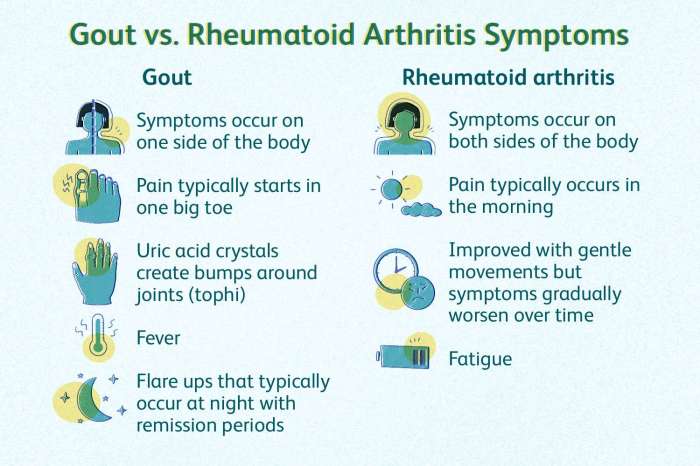
So there you have it, folks! The showdown between Gout and arthritis is less about who’s right and more about understanding their quirky personalities. While one may be a sudden burst of pain, the other is more like a low hum of discomfort that lingers. Armed with knowledge about their unique traits and how they might relate to other health conditions, you can navigate the joint jungle with a little more confidence and a lot less confusion.
Let’s keep those joints happy and dancing smoothly, shall we?
FAQ Compilation
Can gout be mistaken for arthritis?
Absolutely! Both can cause joint pain, but gout typically comes with more intense, sudden flare-ups, while arthritis is often more gradual.
Is gout a type of arthritis?
Yes, gout is actually a form of inflammatory arthritis, specifically caused by high levels of uric acid in the blood.
Can lifestyle changes help manage these conditions?
Definitely! A balanced diet, regular exercise, and staying hydrated can work wonders for both gout and arthritis symptoms.
Are there specific foods to avoid with gout?
Yes indeed! Foods high in purines, like red meat and shellfish, can exacerbate gout symptoms, so it’s best to steer clear!
Can joint pain from gout and arthritis be treated the same way?
Not quite! While some treatments overlap, gout often requires specific medications to lower uric acid levels, whereas arthritis treatment may focus more on inflammation control.


